
It’s never just tea
how I’ve been welcomed in places I didn’t understand

There are some places that have their own rhythm. I felt that right away when we stepped into the ryokan. The low squeaking of old wooden floors and quiet voices held a stillness that felt practiced and natural all at once. My friends moved through the rooms with a familiarity so poised it was clearly muscle memory. They greeted an older woman, composed and unhurried. With a gentle gesture, she guided us to sit at a wooden bar that had been worn smooth. Without interrupting the flow of conversation, she set tea in front of us with a practiced grace that felt inevitable. I didn’t understand the words being exchanged; instead, I listened to the soft cadence of Japanese moving between them. Meaning didn’t matter so much because the tea translated everything I needed to know. I held the cup with two hands, warmth enveloping my palms, and listened, not understanding but being included anyway. Nothing had been asked of me, not everything was explained, but I still felt welcomed.
It takes time to make tea. Heating the water in a proper kettle (not using the microwave), pouring it, waiting for it to cool enough not to burn, and taking slow sips. It resists urgency. You can’t drink it quickly without missing something. Of course, there are always chai concentrates and prepackaged iced teas, and those are good for a while, but there’s something deliberate about the process. It asks you wordlessly to stay, to take in the complexity. When you sit with a cup of hot tea, there is this sort of built-in stillness. You have to sit there and enjoy it. You have to remove the teabag before it gets too strong. It can be a sort of meditation, a forced moment of stillness. But tea is also a bridge.
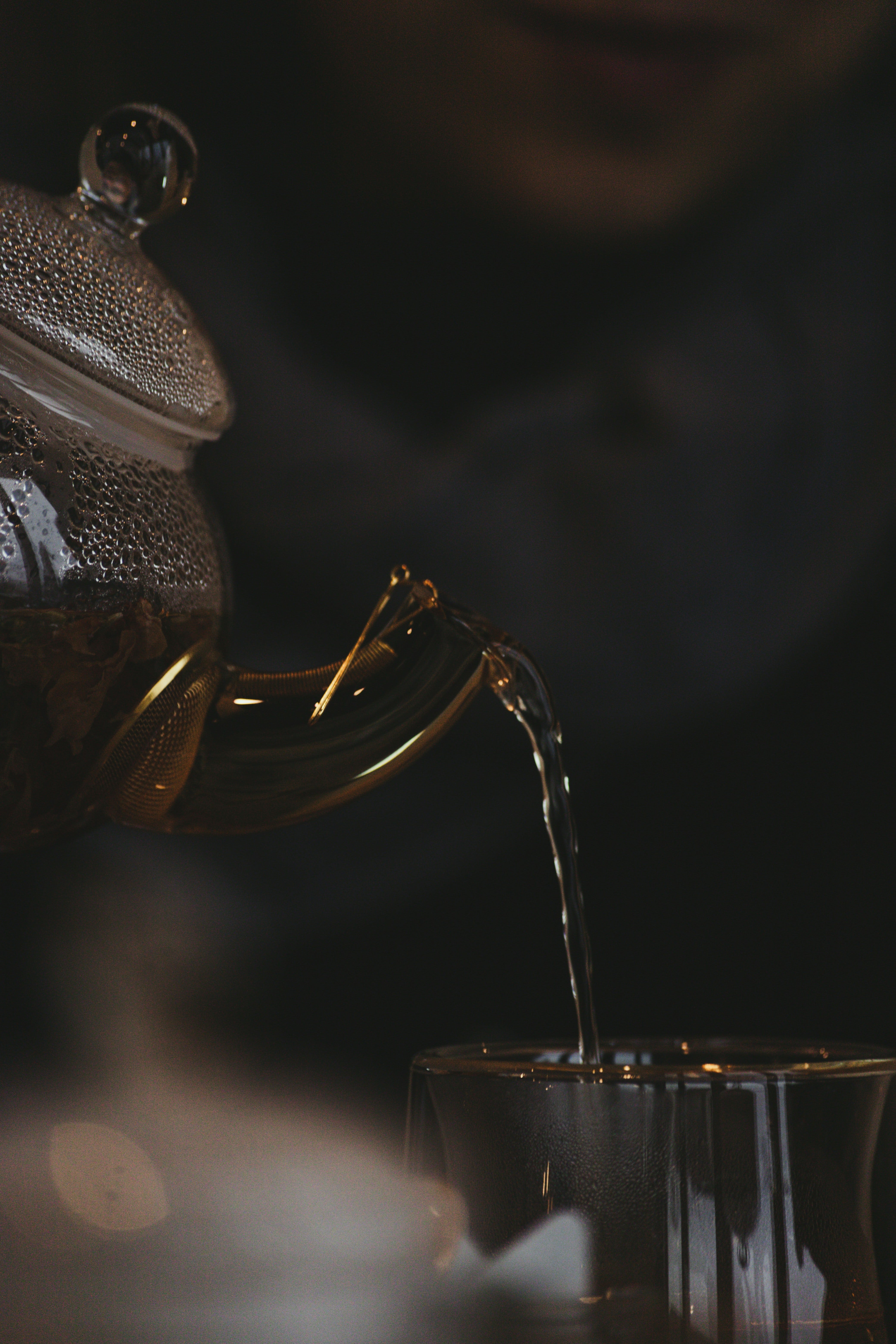
Offering someone tea is basically a shortcut to hospitality without tipping into performance. There is a kind of softening that happens when people sit together with their hands wrapped around ceramic mugs as steam billows into their faces. The choreography of sipping and setting the mug back down creates a shared rhythm. You don’t need to know what to say when there’s tea between you. It gives you something to hold while you linger.
I’ve had tea in countless places. Mint tea in Marrakech as a motorbike zipped past, too close to the cafe tables. Amber-green liquid glowing in the afternoon light as a cat wove between the chair legs and a man called out prices in Arabic, rapid-fire, somewhere behind me. Jasmine tea from small, mismatched ceramic cups in Japan, with legs tucked under the low table, allowing the kotatsu to warm our toes. Murmuring back and forth after dinner, letting an abrupt burst of laughter fill the air as my friend poured me another cup, keeping one eye on the bug that was slowly crawling closer. Condensation dripped off a cold glass of lemon tea in a tiny noodle shop in Hong Kong. I took small sips in between bites of tender beef and slurps of chewy noodles. In Canada, my friend’s grandmother pulled out a matching tea set and cut into a homemade apple cake. “Eat, eat,” she insisted as she switched between German and English. Tea never looked the same, but it always meant something similar: you are not alone anymore, you’re welcome here. I don’t always understand the history or the language, but I’ve always understood the tea. It fills a space before conversation does and makes you feel welcome before words.

Tea is care in its smallest form. Someone making it for you, pouring it into your cup before theirs, maybe even remembering how you take it or refilling your cup without asking. It’s a kind of care that doesn’t always announce itself. It isn’t flashy or grand. Sometimes it simply looks like hot water, leaves, and someone paying attention. It taught me how I receive, how it feels to have someone welcome me with warmth. In turn, I’ve started to notice how I offer things to people, not just tea, but time, attention, and small gestures that say what words don’t.
Now, when I make tea, I don’t think about the drink as much. I think about the moment it creates, the pause, the offering, and the unassuming way it says: you’re welcome here, even if nothing else is certain yet.

something about this newsletter made me delightfully proud to be british. we have a tea bar at work where myself and my friends gather if everything is feeling overwhelming and we chat whilst the kettle boils, the tea brews and our drinks cool enough to enjoy. it’s a slow and necessary ritual to slow down and calm :) this was very beautifully written and i felt like i was drinking tea at that bar with you!!
I actually went out and bought some tea after reading this 💕!